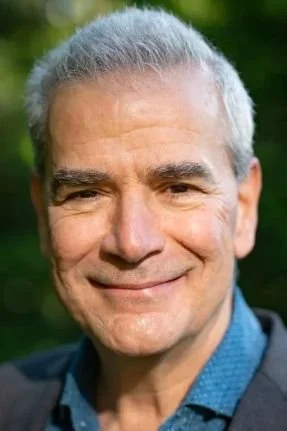
A Scientific Meeting Presented by Dr. Robert Benedetti, Ph.D
Event Price: This event is free. CE fee is $10.
Continuing Education (CEU/CME): 1.5 credits
(CE information will be sent to all attendees the week after the event.)
Attendance: This is a hybrid event: in-person and online attendance is available. Online attendees will have a webinar experience, which will not include the ability to ask questions of the speaker. No attendance limit.
NOTE: Pre-registration is encouraged. Walk-in registration is available. No CEs available for walk-ins.
Reception 6 - 6:30 p.m. at the Center before the presentation.
Course Description: Nearly 30 years after the height of the AIDS epidemic in the United States, when there was not yet hope for a cure and when it was at its most grim, there remains an aging group of gay men who are confounded in their grief. When AIDS appeared, their sexual behavior was linked with illness and death further contributing to their sense of precarity and their experience of alienation. By 1995, AIDS was the single greatest killer of men in America ages 25-44 but with the introduction of protease inhibitors, survivors of this devastating period including those who are HIV+, are often isolated and left to endure a complicated grieving process. Reinforcing the alienation associated with AIDS, the psychoanalytic literature is limited in which grieving experiences of individuals from stigmatized groups such as gay men is interrogated. In addition to the AIDS related focus on loss, this paper, which won the 2025 Ralph E. Roughton Award for Best Paper by the Committee on Gender and Sexuality of the American Psychoanalytic Association, brings in the concept of the apres-coup and how it can be applied to the historical situatedness of gay men. Since psychic space for gay men is often foreclosed, ways in which this may be addressed and implications for the analytic relationship are considered.
Learning Objectives:
1. Describe why the current psychoanalytic literature fails to provide an adequate description of the unique grief experiences of individuals from a stigmatized group, such as gay men post AIDS.
2. List examples of how and why aging gay men are confounded in their grief.
3. Discuss the effect of the self object milieu on the mourning process of gay men.
4. Discuss ways in which the foreclosed psychic space of gay men might be reopened.
Robert Benedetti, Ph.D. is a licensed clinical psychologist and psychoanalyst in private practice in Washington D.C. He received his certificate in contemporary psychoanalysis from the National Training Program—National Institute for the Psychotherapies in New York. He has served as Co-Director of Curriculum and Training Committee Member and is a Consulting Faculty member of the National Training Program. Dr. Benedetti served on the Executive Committee and as Chair of the Psychoanalytic Training Program at the Institute of Contemporary Psychotherapy and Psychoanalysis in Washington, D.C. where as a Faculty Member has taught Candidates classes on Relational Psychoanalysis and Gender and Sexuality and where he also serves as a Supervisor and Training Analyst. His publications include: “Belonging: Ontogeny of a Gay Psychoanalytic Candidate” and a Book Review of “The Unconscious: Contemporary Refractions in Psychoanalysis” edited by Pascal Sauvayre and David Braucher and In Press: “My First Psychoanalytic Encounter: But, Almost 40 Years After It, I Decided to Become A Psychoanalyst Anyway’ and “Gay Men: Loss, Grief, and Mourning and the Reopening of Foreclosed Psychic Space”. He has been invited to contribute an essay to the Journal of the American Psychoanalytic Association’s “Why I Write” Series. He is on the Editorial Board of Psychoanalytic Inquiry. Before training as a contemporary psychoanalyst, Dr. Benedetti was a Clinical/Forensic Psychologist at Saint Elizabeths Hospital in Washington, D.C. where he served as Director of John Howard Pavilion, the hospital for the criminally insane